Security wait times at major U.S. airports have significantly decreased after the Transportation Security Administration (TSA) began receiving back pay following President Trump’s executive order on Friday. While lines remain a concern, conditions improved drastically from the chaotic scenes of the previous week.
Return to Normal Operations, For Now
As of Monday afternoon, Hartsfield-Jackson Atlanta International Airport and William P. Hobby Airport in Houston reported security waits of 15 minutes or less. Even at New York’s Kennedy Airport, a frequent bottleneck, waits topped out around 40 minutes. This stands in sharp contrast to earlier in the week when lines stretched outside terminals, forcing some airports to temporarily disable real-time wait trackers due to excessive congestion. All trackers were functioning again on Monday.
The relief is temporary. The partial government shutdown remains unresolved, meaning TSA employees face uncertainty about future paychecks. If the shutdown continues, longer lines and disruptions are likely to return. This volatility highlights the direct impact of federal funding issues on daily travel operations.
Traveler Reactions and Precautions
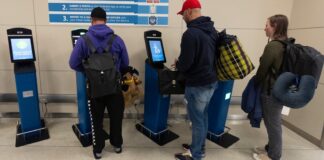
Some passengers, like Adam Coleman and Lynn Desrosiers at Baltimore/Washington International Thurgood Marshall Airport, arrived hours ahead of their flights out of caution. Despite the lack of a wait, they had prepared for worst-case scenarios based on reports from friends about weekend delays.
“We were running out the door to get here,” said Ms. Desrosiers. “Looks like we’re going to spend a lot of money on candy, maybe take a few naps.”
This anecdote illustrates the anxiety travelers experienced during the shutdown and the lengths some took to avoid missing flights.
The current improvement in security wait times is a direct result of restored back pay, but the underlying problem of federal funding instability remains. Until the shutdown ends, passengers should expect potential future disruptions. The situation serves as a stark reminder that even routine travel can be affected by political gridlock.