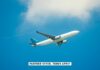
Delta Air Lines has committed to purchasing up to 60 Boeing 787-10 aircraft, marking a significant shift in its long-haul fleet strategy. The order includes a firm commitment for 30 planes, with options for an additional 30, although deliveries are not expected to begin until 2031. This move diversifies Delta’s wide-body fleet, which has historically relied on Airbus aircraft.
Why This Matters: A Balancing Act for Delta’s Long-Haul Routes
For years, Delta has focused almost exclusively on Airbus wide-body jets for fleet renewal. This order signals a willingness to balance its portfolio, hedging against potential risks tied to a single manufacturer. The airline operates an aging fleet of Boeing 767s and Airbus A330s that will eventually need replacement. This Boeing order provides a pathway for doing so, while the A350 will remain the backbone of ultra-long-haul routes.
The Fleet Landscape: Airbus Dominance, Boeing Returns
Delta’s current wide-body fleet consists primarily of Airbus aircraft:
- A350-900 and A350-1000: 44 in service or on order, deployed for transpacific and ultra-long-haul routes.
- A330-900neo: 39 in operation, used for transatlantic flights.
- Older Generations: 42 A330ceo aircraft (average age 16-20 years) and 59 Boeing 767s (average age 25-30 years).
The Boeing 787-10 will slot in alongside the A330-900neo, providing capacity for high-demand routes between North America, Europe, and South America. Delta CEO Ed Bastian emphasizes the order as a step toward “enhancing the customer experience” and replacing less efficient older aircraft.
The 787-10: Economics and Capacity Considerations
The 787-10 is the largest variant of the Dreamliner family, designed for high-density routes. While its range is shorter than other Dreamliners, its per-seat economics are highly favorable, making it well-suited for Delta’s transatlantic and South American markets.
However, the introduction of this larger aircraft will reshape Delta’s long-haul fleet composition. The A330-900neo, with 281 seats, will become the smallest long-haul jet, holding 30%+ more seats than the aging 767-300ER (211-216 seats). This could pose challenges for routes where demand doesn’t justify the larger capacity.
Outlook: A Patient Wait, a Strategic Shift
The 2031 delivery timeline means passengers won’t see these planes in service for at least five years. Delta’s older 767-300ERs will remain in operation until then, despite their age.
Delta’s decision to diversify its wide-body fleet is a logical response to the need for long-term renewal. The 787-10 provides a competitive and efficient option, alongside the A350 and A330neo, to serve its core international markets.