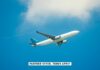
A private Beechcraft King Air 200 successfully completed an emergency auto-landing near Denver, Colorado, on Saturday after the pilot became incapacitated mid-flight. This marks the first documented instance of Garmin’s Emergency Autoland system being deployed in general aviation, a development that underscores the growing role of automation in aviation safety.
Incident Details
The aircraft, registered as N479BR and operated by Buffalo River Aviation, departed Aspen en route to Broomfield at 1:43 p.m. local time. At approximately 2 p.m., the pilot reported a loss of cabin pressure before the Autoland system took over. The plane landed safely at Broomfield (KBJC) at 2:19 p.m., guided entirely by the automated system. Air traffic control maintained standard communication protocols, clearing the aircraft for landing despite the unusual circumstances.
How Autoland Works
Garmin’s Autoland, initially introduced six years ago, is designed to detect pilot incapacitation and autonomously land the aircraft at the nearest suitable airport. The system assesses runway conditions, weather, and terrain to select the optimal landing site. It then communicates with air traffic control, broadcasts automated radio calls, and provides passengers with clear instructions (seatbelts fastened, keep clear of controls). Once on the ground, the system brings the plane to a stop and shuts down the engines, ensuring a safe exit for passengers and first responders.
The Significance of This Event
This incident highlights the practical value of automated safety systems. While private pilot incapacitation occurs on average three times a year in the U.S., the Autoland system provides a reliable solution to an otherwise catastrophic scenario. The system’s ability to handle the entire process, from emergency declaration to safe landing, without human intervention represents a significant advancement in aviation safety.
Future Implications
The success of this emergency auto-landing reinforces the case for increased automation in aviation. As AI technology continues to improve, it is likely that autonomous systems will become increasingly integrated into commercial cockpits, potentially surpassing human co-pilots in performance. The event also raises the need for standardized communication protocols between air traffic control and automated landing systems, including real-time NOTAM (Notice to Airmen) integration to ensure accurate decision-making.
The engineers behind this system are unequivocally heroes. Their work has now demonstrably saved lives, proving the potential of AI as a critical safety layer in aviation.
For anyone facing an in-flight emergency, contacting air traffic control on 121.5 MHz (Guard) or nearby tower frequencies remains the best course of action. However, the emergence of systems like Garmin Autoland offers a new level of safety for pilots and passengers alike.