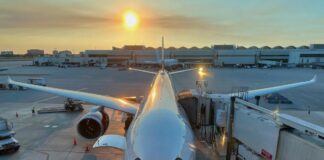
Airlines are bracing for significant financial strain as jet fuel costs surge due to geopolitical instability, particularly escalating tensions in the Middle East. The price of jet fuel has doubled in recent weeks, jumping from just over $2 to around $4 per gallon, according to the Argus US Jet Fuel Index. This spike poses a substantial threat to the industry’s already thin profit margins.
The Impact of Rising Fuel Costs
Jet fuel represents the second-largest expense for airlines, trailing only labor costs. While airlines once relied on fuel hedging to mitigate price volatility, this practice has largely been abandoned due to its unreliability and expense. The consequences are now stark: a sustained rise in fuel prices could wipe out airline profits entirely. For example, United Airlines, with $59 billion in revenue in 2025, spent over $11 billion on jet fuel. A 25% increase in fuel costs would erase its $3 billion net profit.
The impact isn’t uniform. Reuters data shows even a one-cent per gallon increase costs Southwest $22 million annually, Delta $40 million, and American $50 million. This means that sustained high prices will force airlines to make difficult choices.
Airline Responses and Market Reaction
United Airlines CEO Scott Kirby has already warned of a “meaningful” impact on profitability, stating that fare increases will likely be implemented “quick.” However, airlines operate in a competitive landscape where pricing is dictated by consumer demand, not just cost recovery. Maximizing seat occupancy remains the priority, limiting their ability to pass on all additional expenses.
The market has reacted negatively. Over the past month, American Airlines stock has fallen over 27%, while United’s stock is down over 21%. The situation is particularly dire for less profitable airlines, who could face unsustainable losses.
Broader Economic Concerns
The issue extends beyond fuel costs. Higher oil prices contribute to broader economic inflation, reducing consumer spending and potentially dampening demand for air travel. Airlines face a double whammy: higher operational costs and potentially fewer passengers.
What Lies Ahead?
The duration of these high fuel prices remains uncertain. A swift resolution to geopolitical conflicts could stabilize the market, but if these conditions persist, the airline industry will be forced to contend with one of its most severe challenges since the COVID-19 pandemic. The path forward is fraught with uncertainty, and airlines will need to adapt quickly to survive.
Sustained high jet fuel prices will reshape the airline industry, forcing difficult decisions on pricing, capacity, and long-term sustainability. The question isn’t if fares will increase, but by how much, and how long the industry can absorb the shock before broader economic consequences take hold.