Immigration and Customs Enforcement (ICE) agents have been deployed to thirteen major US airports, but their presence has done little to alleviate massive TSA lines. The deployment, ostensibly intended to free up TSA staff for screening duties, appears largely symbolic, with ICE agents mostly standing by rather than actively relieving overburdened screeners.
Widespread Delays Despite ICE Presence
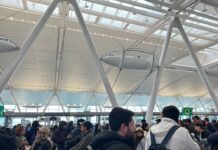
The deployments include major hubs like Atlanta, Chicago O’Hare, Houston, and New York (JFK and LaGuardia), as well as smaller airports like Fort Myers, New Orleans, and San Juan. Despite the ICE presence, passengers are still facing hours-long waits, with lines spilling into parking garages in some locations. The situation is especially dire in cities such as New Orleans and Atlanta, where delays are severe.
Ineffective Relief & Operational Conflicts
The problem stems from a critical staffing shortage: over 11% of TSA screeners are calling out sick nationally, compared to a typical 2%. To fill the gap, 4,000–5,000 additional screeners would be needed. The few hundred ICE agents deployed cannot legally perform screening duties, meaning they offer no functional relief to TSA staff.
Furthermore, ICE agents possess broader law enforcement powers than TSA screeners, raising questions about the appropriateness of this deployment. The agency is being diverted from immigration enforcement and, in some cases, even counterterrorism investigations to address a civilian staffing crisis.
Political Hostage Situation
The underlying issue is a political deadlock over funding for the Department of Homeland Security (DHS). Democrats are withholding funds until immigration enforcement reforms are made, while Republicans are blocking full DHS funding, except for immigration, effectively holding TSA hostage in a policy fight. This standoff, which also includes disputes over voter eligibility through the SAVE Act, is directly causing passenger delays.
Systemic TSA Inefficiency
TSA has a long history of ineffective security practices, compounded by its dual role as both regulator and operator. The agency has also resisted allowing private security contractors at many airports, even where those airports would prefer them. This structural inefficiency, combined with the current funding crisis, creates a perfect storm for travel chaos.
The situation is unsustainable. Passengers are being ransomed over political disputes, and the agency is failing to perform its core function.
The ICE deployment is a temporary fix that does not address the root problems. Until funding is restored and TSA’s systemic issues are resolved, travelers will continue to suffer severe delays.