Heather Poole, a veteran American Airlines flight attendant with three decades of experience, has publicly criticized the carrier’s newest long-haul aircraft, the Airbus A321XLR. After flying the plane on its inaugural international route from New York (JFK) to Edinburgh (EDI), Poole detailed significant operational and comfort issues that affect both crew and passengers.
Ihre Kritik verdeutlicht die wachsenden Spannungen in der Luftfahrtindustrie: Während Fluggesellschaften Schmalrumpfflugzeuge in Langstreckenmärkte drängen, um die Streckeneffizienz zu maximieren, gehen sie häufig Kompromisse bei der Ergonomie der Kabine und dem Wohlergehen der Besatzung ein.
Operative Herausforderungen beim A321XLR
Poole, who has written a book about her career and maintains an active presence on social media, shared a comprehensive list of grievances regarding the aircraft’s design. While the A321XLR is marketed as a tool to unlock point-to-point routes that are not viable for larger wide-body planes, Poole argues the current configuration is not “flight attendant friendly.”
Zu den von Poole identifizierten Hauptproblemen gehören:
- Air Quality Concerns: She reported smelling fumes before takeoff on both legs of the journey, noting that this remains a persistent issue with Airbus aircraft.
- Inefficient Galley and Bathroom Layout: With only one lavatory in the front and three in the rear of the coach section, staff are frequently forced to move service carts to allow passengers to pass, disrupting service flow. Der Küchenraum selbst wird als eng beschrieben, was die Müllentsorgung erschwert.
- Überlastung der Kabinen: Die Gänge der ersten Klasse sind so eng, dass es nahezu unmöglich ist, Passagiere zu passieren, ohne sie physisch zu bewegen. Darüber hinaus müssen Unterhaltungsbildschirme während des Service manuell zur Seite geschoben werden, was den Betrieb verlangsamt.
- Meal Service Difficulties: Tray tables in premium economy and coach are too small for standard meal configurations, forcing staff to stack items precariously.
### Die „Crew Rest Tent“-Kontroverse
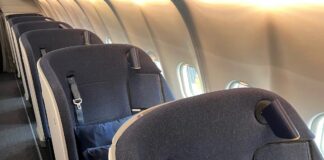
Die vielleicht optisch auffälligste Beschwerde betrifft den Ruhebereich für die Besatzung. Auf Langstreckenflügen ist die Ruhezeit der Besatzung für Sicherheit und Leistung von entscheidender Bedeutung. On the A321XLR, this space consists of three seats in the last row, enclosed by a simple curtain or “tent,” located directly adjacent to the lavatories.
Poole shared video footage of the area, sarcastically noting the lack of amenities: “Here’s the crew rest, here are all the blankets, I don’t even know what to do with them. This is our little tent, right next to the bathroom… isn’t this exciting.”
Diese Designwahl wirft die Frage auf, wie Fluggesellschaften bei der Maximierung der Sitzplatzdichte dem Wohlbefinden der Besatzung Priorität einräumen. While convertible crew rest areas are common on narrow-body jets, placing them next to high-traffic, high-noise zones like lavatories can severely impact rest quality.
### Eine Kultur der öffentlichen Kritik
Über die physischen Designmängel hinaus hat Pooles Beitrag eine Debatte über die Arbeitsplatzkultur in der amerikanischen Luftfahrt entfacht. Im Gegensatz zu vielen nicht-amerikanischen Fluggesellschaften, die oft strenge Social-Media-Richtlinien durchsetzen, die es ihren Mitarbeitern verbieten, ihren Arbeitgeber herabzuwürdigen, scheint American Airlines Pooles häufige öffentliche Kritik zu tolerieren.
Die Association of Professional Flight Attendants (APFA), die Gewerkschaft, die die Flugbegleiter von American Airlines vertritt, rät ihren Mitgliedern, „von herabwürdigenden Kommentaren oder Bewertungen des Unternehmens abzusehen“. Die Durchsetzung scheint jedoch inkonsequent zu sein. Poole postet seit Jahren weiterhin negatives Feedback, ohne erkennbare Auswirkungen, was zu gemischten Reaktionen führte. Some view her transparency as refreshing and necessary for accountability, while others question the professionalism of consistently criticizing an employer publicly.
### Die umfassenderen Implikationen
Poole’s experience with the A321XLR underscores a critical challenge in modern aviation: the race to optimize cost-efficiency often comes at the expense of human-centric design. As airlines deploy narrow-body jets on longer routes to compete with traditional wide-body services, the pressure to minimize space for crew rest and service areas intensifies.
„Es ist nicht flugbegleiterfreundlich. Schwer zu arbeiten, besonders in der ersten Klasse.“
Der A321XLR befindet sich noch im Anfangsstadium seines Einsatzes bei American Airlines. Mit der Erweiterung der Flotte muss die Fluggesellschaft diese betrieblichen Engpässe und Komfortprobleme für die Besatzung angehen. If left unresolved, such design flaws could lead to decreased crew morale, slower turnaround times, and a diminished passenger experience—ultimately undermining the very efficiency gains the aircraft was meant to deliver.
In short, while the A321XLR promises new route possibilities, its current execution suggests that the human element of flight operations is being overlooked in favor of structural compactness.