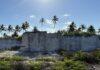
I am on my knees in the dirt. Hoe in hand. The wind whips through my hair while I plant veloutier argenté with twenty strangers. It’s September 2020. Pomponette Beach, south Mauritius. We aren’t here for a vacation. We’re planting this native shrub—leaves that shimmer like silver in the sun—to keep the coast from washing away. We’re trying to steal it back before it becomes someone’s private pool deck.
Mauritius is tiny. 700 square miles of tropical rock off Africa’s southeastern tip. But the history here is heavy. Dutch, Portuguese, French, British. All left their fingerprints. Or footprints. Or chains. Enslaved people from East Africa came first. Then indentured laborers from India. My ancestors among them, hauling cane. Traders from Southern China arrived later. A messy, beautiful tapestry. Independence in 1968 didn’t erase the map.
Last summer I tried an experiment.
The western coast of Black River is pricey. Luxurious villas line the sand here. It’s where tourists come for kayaks in the mangroves or hikes up Le Morne Mountain, that UNESCO site where runaway enslaved people found shelter centuries ago. But what happens in between? I wanted to see if a local could walk from La Preneuse—row upon row of gated luxury homes—to the public beach at Tamarin.
It shouldn’t have been an issue. For us, the beach isn’t about plush loungers and overpriced cocktails. It’s about stacking plastic chairs. Eating biryani off paper plates. It’s the only break from the cane fields, the factories, the office grind. We tell stories of Touni-Minwi—the Werewolf of Midnight—by the bonfire. We drink cane rum. We belong here.
“How easy is it to simply exist on the sand you were born next to?”
Spoiler: Not very easy.
This isn’t just a Mauritius problem. It’s a colonial hangover. Look at Jamaica. Only one percent of its beaches are actually public. A 1956 law from the British days lets the state lease 99% of the coast. Most of that went to resorts. Dominican Republic? Same story. Gentrification is eating the shoreline alive. In French Polynesia, Mo’orea island has just three public beaches left. Three.
Hawaii tries. Laws say the beach is public. But rich homeowners pile rocks. They plant trees. They try to redraw the high-water line. Courts have to step in, year after year, to tell property owners: No. That’s not yours.
Here in Mauritius, the Law Reform Commission did a report in 2024. They found out the hard truth. The state lists 134 “public beaches.” That sounds generous. But those beaches cover less than 15% of the 200-mile coastline. The other 40%? Leased to hotels. Private villas. The rest? A blur of forest and farmland with unclear rights.
I kept to the sand. No shortcuts. Just walking.
For that one hour, I was the only black local for miles. I got looks. Weird ones. Passive-aggressive stares. One hotel sign caught my eye: “LEASED BEACH: WALKING OK. SWIMMING OK. STAYING NOT OK.”
Who decides that?
The Beach Authority Act of 2007 is clear. Anything between the high-tide mark and 100 meters inland is public. Always. Even if a hotel paid the government for the dune behind it. You can sit there. You can breathe. Security guards don’t get to make you move. But the Commission’s new report says we need to criminalize blocking that strip anyway. Because intimidation is the point.
I’ve been fighting this since I was in my 20s. The group was AKNL. Aret Kokin Nou Laplaz. It means “stop stealing our beaches.” We didn’t protest with anger. We protested with joy. Picnics. Music. Camping. We invaded the threatened spots with good vibes. It’s harder to kick out people laughing than people screaming.
Pomponette Beach was our battlefront. In 2011, the government leased it to a shady South African developer. No transparency. No notice. We camped there for a decade. In 2023, Pomponette went back to the people. A win.
But the war isn’t over. AKNL changed. Now we are MRU 2025. Lobbying instead of camping. Carina Gounden, who organized our early protests, says the shift makes sense.
“Protecting the landscape protects tourism. When locals feel connected, they become its ambassadors. When they’re pushed out, they hate the place.”
Now we’re pushing for a seven-mile ecotourism trail in the south. From Gris Gris to La Cambuse. Gris Gris has no reef. Just cliffs and crashing waves. It’s violent beauty. Pont Naturel arches over the sea. Le Souffleur shoots water into the air. It’s untouched.
We want to protect that. Not for Instagram. For us.
Fabian Pierre Louis runs the fishing community in Black River. He’s in a documentary called Bann Vag Laliberte —Waves of Freedom. Directed by Christopher Amurat. They both know the cost of loss. Pierre Louis plays the ravann drum. The sega dance. It comes from Madagascar. From the ritual beats of ancestors who survived the Middle Passage. He says when we can’t get to the quiet coves, when we can’t camp with friends, the joy dies. Materialism moves in. Sadness stays.
Amurat thinks the tourism model needs a transplant.
Why stay in a sterile hotel tower when you can eat rice and saltfish with a family? Why view culture as a commodity when you can live it? Homestays exist. Especially on Rodrigues island. But on the main island? Still rare. Most big hotels are owned by a handful of families. Old French colonial names. Same ten families. Same wealth. Same control.
Breaking that grip isn’t about hate. It’s about distribution. Village tours led by residents. Meals shared in living rooms. Revenue spreading wider.
I finished my walk. Tamarin Beach.
The noise hit me. Noodle stalls sizzling. Shaved ice carts dripping tamarind. Kids playing soccer in the surf. Elderly women napping on inflated mattresses in bright sarees. Tourists in bikinis. Surfers catching waves. Chaos. Life.
Next to it sat Veranda Tamarin. A cozy three-star. Not a mega-resort. Emma Rioux from the management said it straight.
“We are opposite the public beach. That is our selling point. We want the village spirit. Not the resort bubble.”
She’s right. The rhythm matters.
I hope tourism here changes. Equity. Access. Not just for us, but for the visitors too. Because seeing the real island is better than the sanitized version. Activists pushed back. We won Pomponette. We blocked a development at Le Morne Mountain.
But 2024 brought new pressure. An economic crisis looms. The Middle East conflict shakes markets. And what do we see? Billboards return. Advertising $85,000 villas on the coast. Again.
The law is there. The land is there. But the will?
The tide keeps coming in. We have to keep watching the sand.