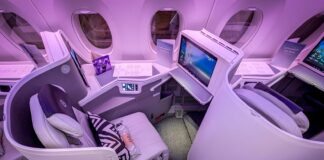
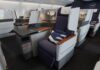
Air Canada has announced a significant transformation of its in-flight experience, introducing new cabin interiors and premium seating configurations across its fleet. This rollout marks the debut of the airline’s “Glowing Hearted” design standard, a strategic move aimed at modernizing its service model and enhancing passenger comfort through improved ergonomics and technology.
A New Era of Long-Haul Comfort
The centerpiece of this upgrade is the introduction of Air Canada Signature Class, a premium business-class offering that will debut this summer on the Airbus A321XLR. This rollout is particularly notable because it marks the first time the airline will provide lie-flat seats on a single-aisle aircraft, a trend increasingly used by global carriers to make long-haul, narrow-body routes more competitive.
The upgrades will be rolled out across two primary aircraft types:
The Airbus A321XLR (Narrow-body)
Designed for transatlantic and transcontinental routes, this aircraft will feature:
– Business Class: 14 seats in a 1-1 herringbone configuration. While these seats lack full doors, they will include sliding privacy panels to provide a sense of seclusion.
– Economy Class: 168 seats, including 36 with extra legroom.
– Fleet Context: Air Canada currently has 30 of these jets on order from Airbus.
The Boeing 787-10 (Wide-body)
Positioned as the airline’s new flagship, the 787-10 will offer a more expansive premium experience:
– Signature Class: 42 seats in a 1-2-1 reverse-herringbone layout.
– Signature Class Plus: An enhanced first row of business-class seats featuring larger, more spacious suites. These include a center divider that can be lowered for passengers traveling together.
– Premium Economy: 28 seats featuring “privacy wings,” a design element similar to those used by major US competitors like Delta and United.
– Economy Class: 262 seats.
Modernizing the In-Flight Environment
Beyond seat configurations, Air Canada is implementing a fleet-wide technological and aesthetic refresh. The new cabins move away from utilitarian designs toward a “peaceful and relaxing” aesthetic, utilizing gray tones, natural wood grains, and bronze accents, all punctuated by the airline’s signature red.
Key hardware upgrades include:
– Enhanced Entertainment: Larger OLED 4K screens with Bluetooth audio connectivity.
– Improved Connectivity: Dedicated USB-C and AC power outlets at every seat.
– Better Storage: Larger overhead compartments and ergonomic seats equipped with holders for phones and tablets.
Beyond the Seat: A “Distinctly Canadian” Service Shift
The physical cabin changes are only one part of a broader strategy. Air Canada has signaled a comprehensive overhaul of its “soft product”—the intangible elements of travel. This includes a complete redesign of food and beverage services, upgraded amenities, and a revamped hospitality approach intended to reflect a “strong Canadian sense of place.”
While specific details regarding the menu and service protocols are expected later this year, the airline’s leadership emphasizes that these changes are a direct response to passenger feedback.
“This investment is about fundamentally redefining the experience of flying with Air Canada,” stated Mark Nasr, Executive Vice President and Chief Operations Officer.
Summary
Air Canada is investing heavily in both hardware and service to modernize its fleet, specifically targeting the premium market with lie-flat seats on narrow-body jets and enhanced wide-body suites. This multi-layered upgrade aims to blend high-tech functionality with a refined, uniquely Canadian hospitality experience.