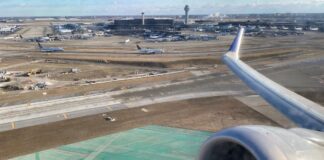
A growing concern has emerged regarding whether the safety alert systems at LaGuardia Airport (LGA) were intentionally calibrated to be less sensitive, potentially contributing to a recent runway collision involving an Air Canada aircraft.
The Role of ASDE-X in Airport Safety
At the heart of this investigation is the ASDE-X (Airport Surface Detection Equipment, Model X). This sophisticated surveillance system is designed to act as a digital watchdog for air traffic controllers. Its primary function is to monitor ground movements and issue immediate alerts when a potential collision or runway incursion is detected.
The system operates using “safety cells”—mathematical parameters based on time and distance. By monitoring these cells, the system can predict if two moving objects, such as a regional jet and a fire truck, are on a collision course.
The Trade-off: Accuracy vs. Sensitivity
During the development of ASDE-X at the FAA’s Technical Operations center, a critical design challenge arose: the problem of false alarms.
If a system is too sensitive, it triggers constant, unnecessary warnings. In a high-pressure environment like an air traffic control tower, frequent “nuisance alarms” can lead to:
– Alarm fatigue: Controllers may begin to ignore or distrust the system.
– Skewed performance metrics: False alarms are often recorded as controller errors, which can unfairly impact professional evaluations.
To combat this, the FAA worked with controller groups to adjust the time and distance parameters of these safety cells. Because every airport has a unique layout and traffic flow, these settings were customized at each location. In many instances, these adjustments were so significant that they effectively eliminated the possibility of a false alarm —but they may have also inadvertently eliminated the ability to detect real dangers in time.
The LaGuardia Connection
According to insights from a retired FAA systems engineer involved in the original design of ASDE-X, there are serious questions regarding the specific settings used at LaGuardia.
The informant suggests that the safety parameters at the LGA tower may have been “turned down” so low over many years that the system became ineffective. If the thresholds for distance and time were set too loosely to avoid nuisance alerts, the system might have:
1. Failed to trigger an alert entirely during the incident; or
2. Triggered an alert too late for the pilot of the regional jet or the driver of the fire truck to take evasive action.
Why This Matters
This situation highlights a fundamental tension in aviation safety: the balance between system reliability and system sensitivity. While reducing false alarms is essential for operational efficiency, overly aggressive