


Not Just A Lake
Deep. Ancient. Massive.
It holds more water than all the Great Lakes in North America. Not just more surface area. More volume. If you lined up all that freshwater, it would drown us all twice over. And it sits in the middle of Siberia, far away from the people who need it most.
Most lakes die. They get clogged with sediment, dry up, vanish into the memory of the landscape. Baikal refuses to do that. Why? Because the Earth is actively ripping it apart.
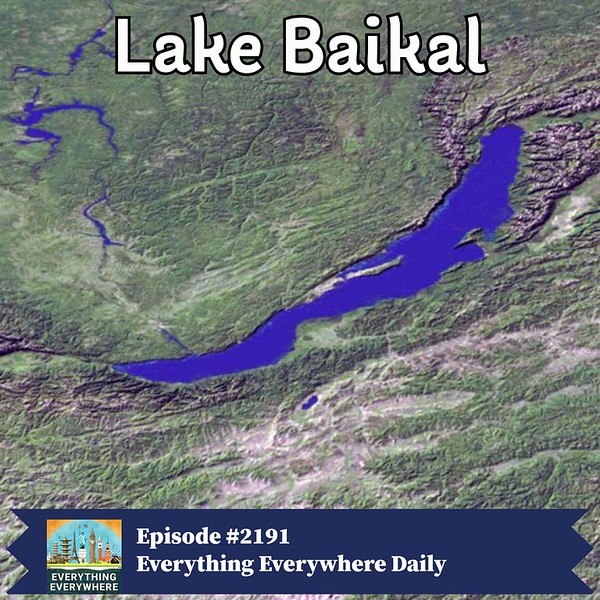
This isn’t a metaphor. Baikal sits on the Baikal Rift Zone. Tectonic plates are pulling Siberia apart like a piece of chewing gum. As the crust stretches, the lake sinks. Deeper and deeper.
Seismic data shows miles of sediment stacked at the bottom. We’re talking 4.5 miles of mud and history buried in the dark. It’s an embryonic ocean. Maybe. Maybe not. But for now, it’s the deepest lake on Earth at roughly 5,400 feet down.
Life In The Abyss
Isolation breeds weirdness.
Baikal has been here for 25 million years. That’s enough time for evolution to get creative. Unusual species evolve. Unique species emerge. Species found nowhere else.
Enter the nerpa.
The Baikal seal is the only freshwater seal in existence. How it got there? Probably hitched a ride via Arctic river connections long ago, then got stranded and adapted. It stayed.
Then there’s the omul fish. A staple of local diets. Essential. But the invertebrate world is where the lake really shines. Amphipods. Sponges. Mollusks. Crayfish the size of your arm.
It’s less of a lake and more of a time capsule for biological diversity.
The water stays oxygenated at incredible depths. Cold. Clear. Rich. It supports life in ways warmer, younger lakes cannot.
Humans Are Terrible Neighbors
Humans arrived. They always do.
Hunter-gatherers wandered the shores millennia ago. Then came the Turkic, Mongolic, and Buryat peoples. For the Buryats, the lake is sacred. A living entity.
Then came the Russians in the 17th century. With guns. With empires. With an expansionist hunger that couldn’t be stopped by a lake or two.
Baikal became a place for exiles. Political prisoners. Revolutionaries who messed up. The Siberian taiga became synonymous with punishment.
And then, the train.
The Trans-Siberian Railway had a problem: water.
Trains couldn’t drive on ice every day. They needed a line around the southern tip. Engineers built tunnels and bridges into sheer cliffs. The Circum-Baikal section was a masterpiece of brute-force engineering. It was expensive. Dangerous. And ultimately unnecessary.
A dam built downstream on the Angara River raised water levels. The main route shifted. The beautiful cliff-side tracks were abandoned to tourism.
The Pulp Problem
The 20th century brought industry.
In 1966, the Soviet government built the Baikalsk Pulp Mill on the shore. Why make paper? Specifically, for tire cords on fighter jets. Strategic importance outweighed ecological reality.
It poured toxic waste directly into the lake.
Scientists protested. Writers protested. This was the USSR. Dissent was not exactly encouraged. Yet, people spoke up.
The mill struggled. It closed for good in 2013 after decades of legal battles and environmental decay. The plant is gone, but the toxic legacy in the lagoon remains. A festering wound on the pristine shore.
Thirst And Tourism
Today, the economy runs on two engines: water and bodies.
Tourism exploded after the Soviet Union fell. Olkhon Island. Ice routes. Cruises. It’s beautiful. It’s lucrative. It’s messy.
Sewage flows in. Illegal construction spreads. Unregulated tour operators clog the beaches.
And then there is the thirst.
China is dry. Especially in the northwest. The idea is seductive: pump the world’s largest freshwater reserve north into Chinese cities.
In 2019, a Chinese-funded bottling plant opened near Kultuk. Outrage erupted. It shut down shortly after. But the dream persists.
A pipeline from Baikal to China would be 2,000 kilometers long. Pumping water uphill. Over mountains.
Will it happen? Probably not. Russia won’t let it. Geopolitics makes it impossible.
But even if politics aligned, the environment would rebel. Lower the water level? End the endemic species? UNESCO designation doesn’t stop greed.
Still Drifting
The rift is still moving. The earthquakes still happen.
Baikal is getting wider. Getting deeper. It has millions of years to become something else.
It’s a resource that feels infinite, but is fragile as glass. We treat it like a tap we can turn. We forget it’s a biological archive older than the continents surrounding it.
It holds 20% of the world’s surface freshwater.
What will we do with it?


