


Elite status used to feel rare.
Now? It’s everywhere.
Credit card bonuses, stay challenges, points transfers—the barrier to entry for top-tier hotel perks has collapsed. That’s not necessarily a bad thing, but it changes the math. I still chase elite status for the reliable stuff: guaranteed late checkout, lounge access, breakfast included. These are contracts. You earn them, they deliver them.
But the discretionary stuff? Room upgrades? That’s a battlefield now.
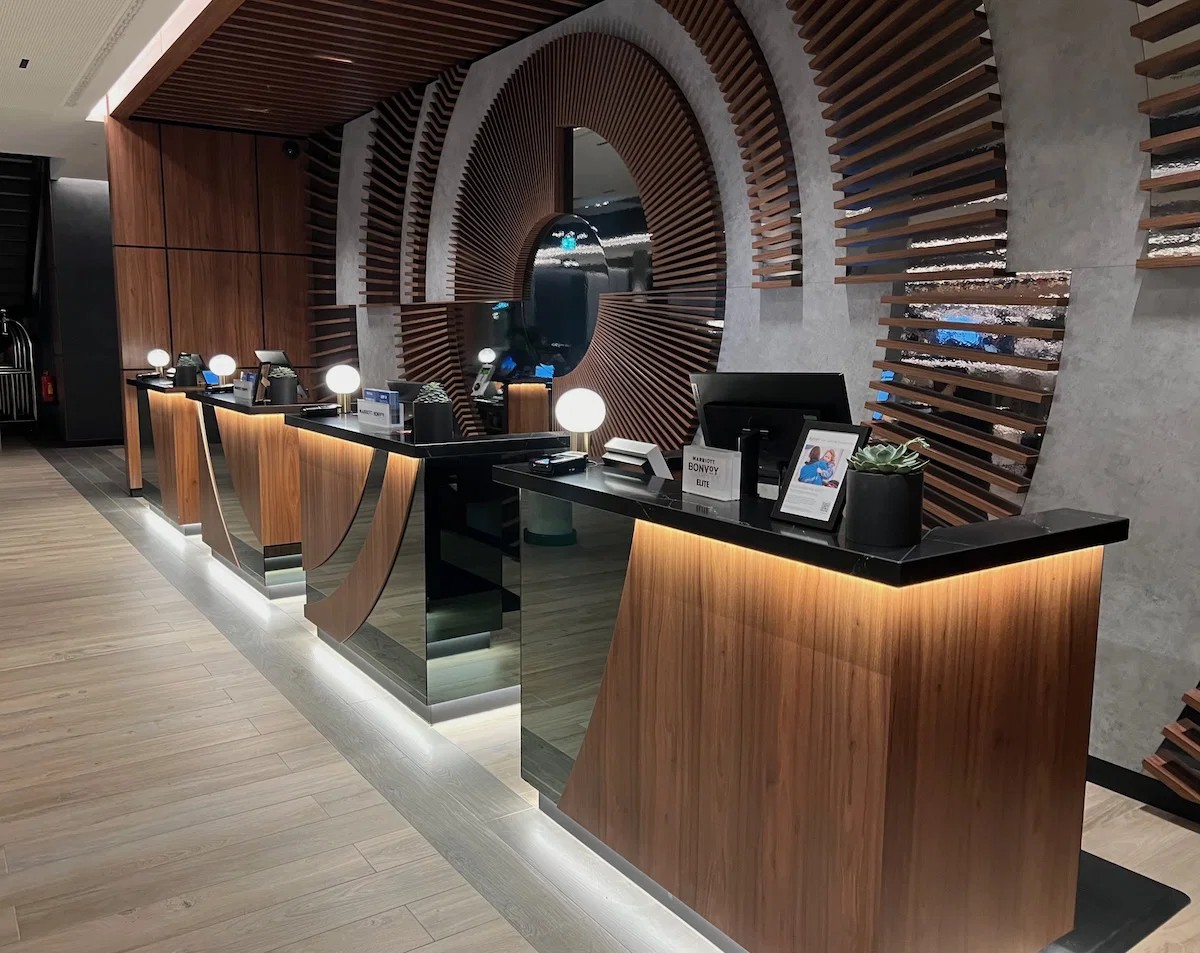
And lately, the battlefield has moved to the check-in counter.
The Sign
You’ve probably seen them, even if you’ve only noticed them fleetingly before looking away in mild offense.
Signs posted right next to the key hand-off.
They list the number of elite guests staying at the property.
Sometimes it’s just checking in today. Sometimes it’s total occupancy. Often it’s both. The phrasing is usually cheerful—a faux-friendly greeting welcoming all those “loyal members.” There’s almost always a asterisk or footnote reminding us that upgrades are space available.
It’s happening most often at Marriott Bonvoy hotels, but it’s bleeding into other chains. These aren’t corporate mandates, though. Each sign is slightly different. Hand-written sometimes. Printed on nice cardstock others. It feels like a local management experiment.
One by one.
A slow creep of transparency.
Useful or Insulting?
The reaction splits people cleanly into two camps.
Camp A says this is helpful. It’s reality. These signs are a cold splash of water that reminds frequent flyers that we aren’t special, no matter how much marketing copy insists we are. If fifty people are in the room with Titanium status, and there are four suites, you are not entitled to one of them. You are lucky.
Camp B says it’s rude. It’s passive-aggressive. It’s the hotel saying we can’t accommodate your demands before you even make them.
I want to know my odds, even if knowing them ruins the fantasy.
I side with Camp A, mostly because fantasy makes me angry. Anger is boring. Knowing I have a 2% chance of getting a suite is manageable.
The problem is the business model. Hotel chains don’t want you to know the odds.
They need you to believe status is a golden ticket. They need you to fly across the country, or burn through cash, to earn that plaque. If you stand in line and realize that the person ahead of you, behind you, and beside you all bought the same priority boarding pass—well, then why bother buying it?
It’s the “Come Fly With Me” clip. You pay for speedy boarding, board early, and discover everyone else did too. You’re not moving faster. You’re just standing still in a different line.
So corporations suppress these signs. The individual hotels put them up. There’s tension there.
The Context Gap
Most guests don’t realize how much variance exists between a Tuesday in Chicago in November and a Friday in Orlando in December.
The elite density varies wildly. Location, day of week, season, specific brand reputation. Most travelers guess. They see a suite on the website and ask for it. That used to be a solid heuristic. It isn’t anymore.
Airlines publish upgrade waitlists. It’s ugly, digital, and cold, but it works. You know you’re 500th in line. You go find a beer instead. Hotels could do this. Maybe they should. It shifts the dynamic from “the hotel is being cheap” to “there is a mathematical limit here.”
I hope the hotel does everything possible for me. But if they don’t? It helps to know it’s not malice. It’s just crowd control.
A Bit Tacky
But here is the rub.
It feels wrong.
As a customer, you expect the hierarchy to be hidden. It’s polite society. You tip the server. You wear the suit. You don’t point out that the other guy tipped more and deserves the better table.
If you’re there for your honeymoon? Spending two thousand a night at the Ritz? No status, no points. Just cash. You see the sign listing 85 Elite Platinum guests and you feel small. Not because you got a worse room—you didn’t. But because you’re publicly sorted on a totem pole.
It’s a transaction made visible. And humans hate that.
So
Will we see these signs everywhere?
I doubt it. Corporate wants to sell the dream. Dreams require a lack of data.
Do I like seeing them? Yes. I prefer a slight sting of reality to a pleasant surprise that turns out to be a denial. I like knowing where I stand, even if standing there means watching 40 other people stand ahead of me.
It’s tacky.
But it’s honest.
And honestly, in travel, we don’t see enough of that.


